ServicesWhole-Home Filtration
Whole-Home Filtration in Round Rock
A point-of-entry carbon system treats water at your main line, so every shower, faucet and ice maker gets the same supply without chlorine taste, odor or sediment. We start with a free test, then size and install the right new system.
Point-of-entry carbon, explained
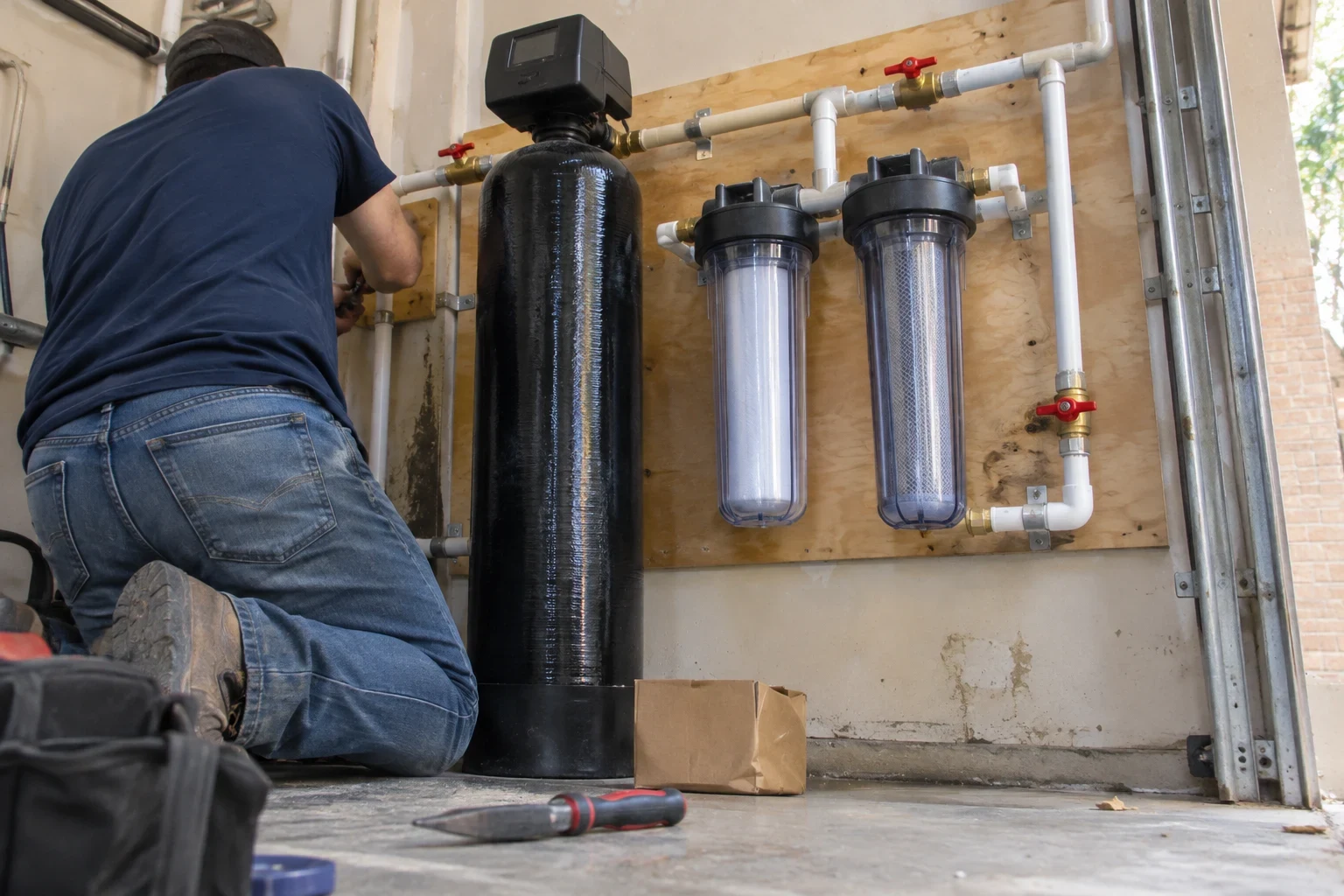
Point-of-entry filtration means a media tank and control valve plumbed into your main water line, ahead of the water heater and every fixture. Most of the systems we install use catalytic carbon. It captures chlorine and breaks down chloramine, the disinfectant many Texas utilities use to keep water safe in the distribution pipes. Standard carbon handles chlorine well but works poorly on chloramine, so the media inside the tank matters more than the label on the outside.
It is the right call when the complaint shows up everywhere: a pool smell in the bathroom, dry skin, chlorine in the ice. If the only concern is drinking water, a reverse osmosis system under the sink may serve you better. If the issue is white crust on fixtures from Central Texas limestone, that is hardness, and carbon will not touch it. A salt-free water conditioner or a water softener addresses that, and we will tell you which one the test supports.
Many systems we see are not dead, just neglected. Spent carbon, a cracked distributor tube or a stuck valve can make a good tank look like a failure. We check for those first.
What the work includes
Water test before any recommendation
We measure chlorine or chloramine, hardness, pH and total dissolved solids at your tap. Those numbers decide the media and whether filtration alone is enough.
Sizing to your flow rate
Tank size is matched to your peak flow in gallons per minute and your pipe size, usually 3/4 or 1 inch. An undersized tank pushes water through the carbon too fast for it to work and drops your pressure.
Sediment prefilter
A cartridge ahead of the main tank catches sand and pipe scale so the carbon bed does not clog early.
Bypass valve and clean plumbing
Every install gets a bypass, so you can keep water running if the system ever needs service. We tie into an existing plumbing loop where your home has one.
Sized and Installed New
We size the carbon tank to your peak flow and household, so water spends enough time in the media to come out clean. Then we install it new on your main line with free installation.
Signs your home needs filtration
Pool smell when you bathe
Warm water and spray drive dissolved chlorine into the air, which is why the bathroom gives it away before the kitchen tap does. A carbon bed in good shape should take that smell out.
Chlorine taste at every tap
When drinking water, coffee and ice all taste of chlorine, the disinfectant is reaching every faucet. A whole-home carbon system takes it out at the main line.
Pressure dropped after install
A clogged prefilter or compacted media bed restricts flow. Both are fixable without touching the tank itself.
Black specks at faucets
Carbon fines downstream usually point to a cracked distributor tube or a broken upper basket inside the tank.
Drips at the control head
Leaks at the valve often trace to worn O-rings or seals. We swap those parts and keep the head when the body is sound.
How a job runs
- 1
Phone call and free test
You call, we set a time and test your water at your home. You see the readings as we take them.
- 2
An honest recommendation
We explain what the readings mean and quote the new system the test supports, with the tank size and media spelled out and free installation included.
- 3
Installation day
Plan on a morning or an afternoon for a typical install. The main stays off while we cut in the prefilter, bypass and media tank, then water comes back on so we can flush the new carbon until it runs clear.
- 4
Walkthrough and cleanup
We show you the bypass, how to change the prefilter cartridge and when the media will need attention. Packaging and old parts leave with us.
What sets the price
Installation is free, so most of your quote is the equipment and media your home calls for. We size the new system from your test and your household, so you pay for the capacity you need. You hear the complete number by phone or see it in writing before we begin.
- Flow and tank size
- How many bathrooms you have and how many fixtures run together set the gallons per minute the system must deliver. That sets the tank diameter and the amount of carbon inside it.
- Which media goes in
- Catalytic carbon for chloramine is priced above standard carbon. Extra media for other problems adds more.
- The new system you choose
- Tank size, control valve type and media set the equipment price. If an old unit is in place, we remove it and install the new one in its spot.
- Plumbing where water enters
- An existing plumbing loop keeps the parts list short. Without one, we need more fittings and pipe to reach the main line.
Questions about whole-home filters
Something not covered here? (512) 812-9374
Will a whole-home filter make my water soft?
No. Carbon targets chlorine, chloramine, taste and smell, but calcium and magnesium pass straight through, so fixtures and the water heater still scale up. If your test shows real hardness, we talk through a water softener or a salt-free water conditioner alongside the filter.
How often does the carbon get changed?
That depends on how much water your household uses and how much disinfectant your supply carries, so we set the timing from your test and family size instead of a fixed date. The sediment prefilter cartridge needs changing more often, and we show you how to swap it yourself.
How do you pick the right system size?
We count your bathrooms and the fixtures that run together, check your pipe size and read your chlorine or chloramine level. Those numbers set the tank diameter and how much carbon goes inside, so the water slows down enough for the media to work without dropping your pressure.
Does the system need an outlet or a drain?
A backwashing system needs power nearby and a drain line to rinse the bed. An upflow system never backwashes, so it needs neither one. The right choice depends on your water and where your plumbing enters, and we check both during the visit.
Will I lose shower pressure?
If the tank is sized to your peak flow and pipe size, most people feel no change. A noticeable drop usually means the tank is too small or the prefilter or media bed is clogged, and both are fixable.
Start with a test, not a sales pitch
We serve Round Rock and nearby towns like Georgetown, Cedar Park and Pflugerville. One call gets your water tested and a straight answer on which new system fits your home.