ServicesWater Softener Installation
Water Softener Installation in Round Rock
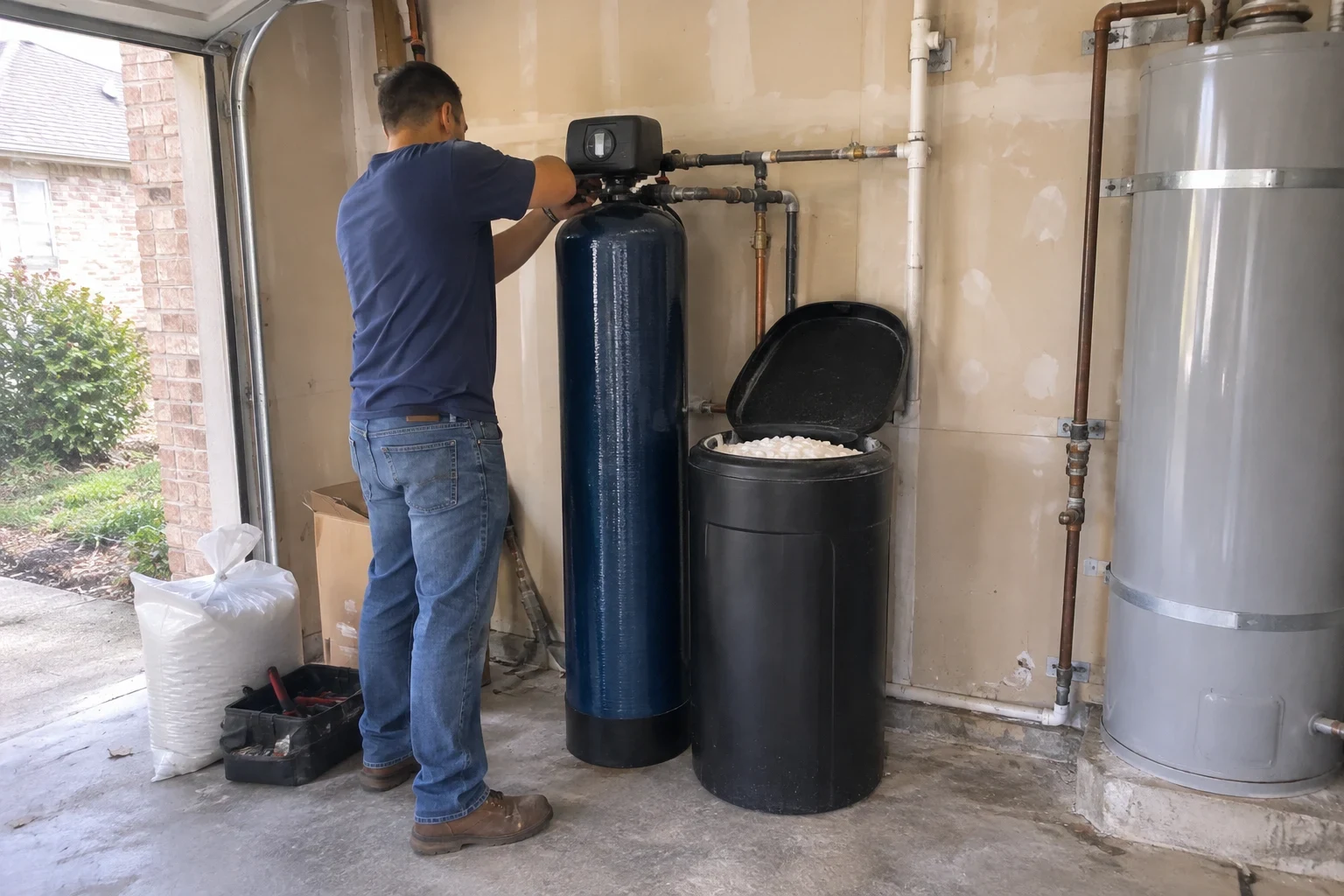
We install water softeners sized to your measured hardness and daily water use. We also help you replace an old or failing softener with a new one. Every job starts with a free water test, so you see the numbers before anyone talks about equipment.
How a softener trades out hardness, and which homes it fits
Inside a softener's mineral tank sits a bed of tiny resin beads with a negative charge. Water passing through leaves its calcium and magnesium ions on the beads, and each bead releases a sodium ion in exchange, or potassium if you fill it with potassium chloride. Those two minerals are the ones that crust faucet aerators, spot glassware and coat the inside of your water heater with scale. Once the beads are full, the control valve rinses the bed with brine drawn from the salt tank, readying it for the next cycle.
Hardness is not the same from one source to another, so we test yours before recommending anything. If the number comes back modest, or you would prefer not to carry salt bags, a salt-free water conditioner might suit your home better, and we will say so.
Has your softener stopped working? A new, correctly sized unit is the fix.
What the softener work covers
- Readings for hardness and iron
- The free test gives hardness in grains per gallon and checks for dissolved iron, which coats resin beads and shortens their life. Those two numbers set how much resin you need and how regeneration gets programmed.
- Sized for your household
- We size the softener from your hardness and your home's daily water use. An undersized unit regenerates nonstop and wastes salt and water. An oversized one costs you for capacity you never touch while the resin waits through long gaps between cycles.
- Main-line connection with a bypass
- A bypass valve lets the softener be taken offline while the rest of the house keeps its water. We connect on the main line, typically in the garage or by the water heater, using fittings that match your copper or PEX.
- Air-gapped drain line
- Regeneration water drains through an air gap so nothing can siphon back into the system. A missing air gap is among the most common faults we see on older installs.
- Replacing an older softener
- When an old softener has stopped keeping up, we take it out and install a new unit sized to your current hardness and household. Many older units were never sized right to begin with.
- Settings and a walkthrough
- We enter the hardness value, regeneration time and salt dose, then show you how to check the brine tank and work the bypass.
Signs your home needs a softener
White scale on fixtures
Chalky buildup on showerheads, faucets and the glass door points to calcium and magnesium in the water. It comes back quickly after cleaning when hardness is high.
Soap that will not lather
Hard minerals bind with soap, so shampoo feels sticky and laundry comes out stiff. You end up using more detergent to get the same result.
A water heater that pops or rumbles
That noise is usually scale and sediment on the bottom of the tank. The scale insulates the water from the burner and wastes energy.
Salt level never drops
If the salt in your brine tank has not gone down in weeks, the softener probably is not regenerating. Common causes are a clogged injector, a hard salt bridge or a timer that lost its settings after a power outage.
Salt tank flooded
Water sitting high in the salt tank tends to mean the drain line is plugged or the float or brine valve has failed. Those call for a part, not a new system.
Hard water is back
When an existing softener stops softening, it is time for a new one. We replace it with a correctly sized unit matched to your measured hardness.
How a softener job runs
- 1
Free water test and a look at your plumbing
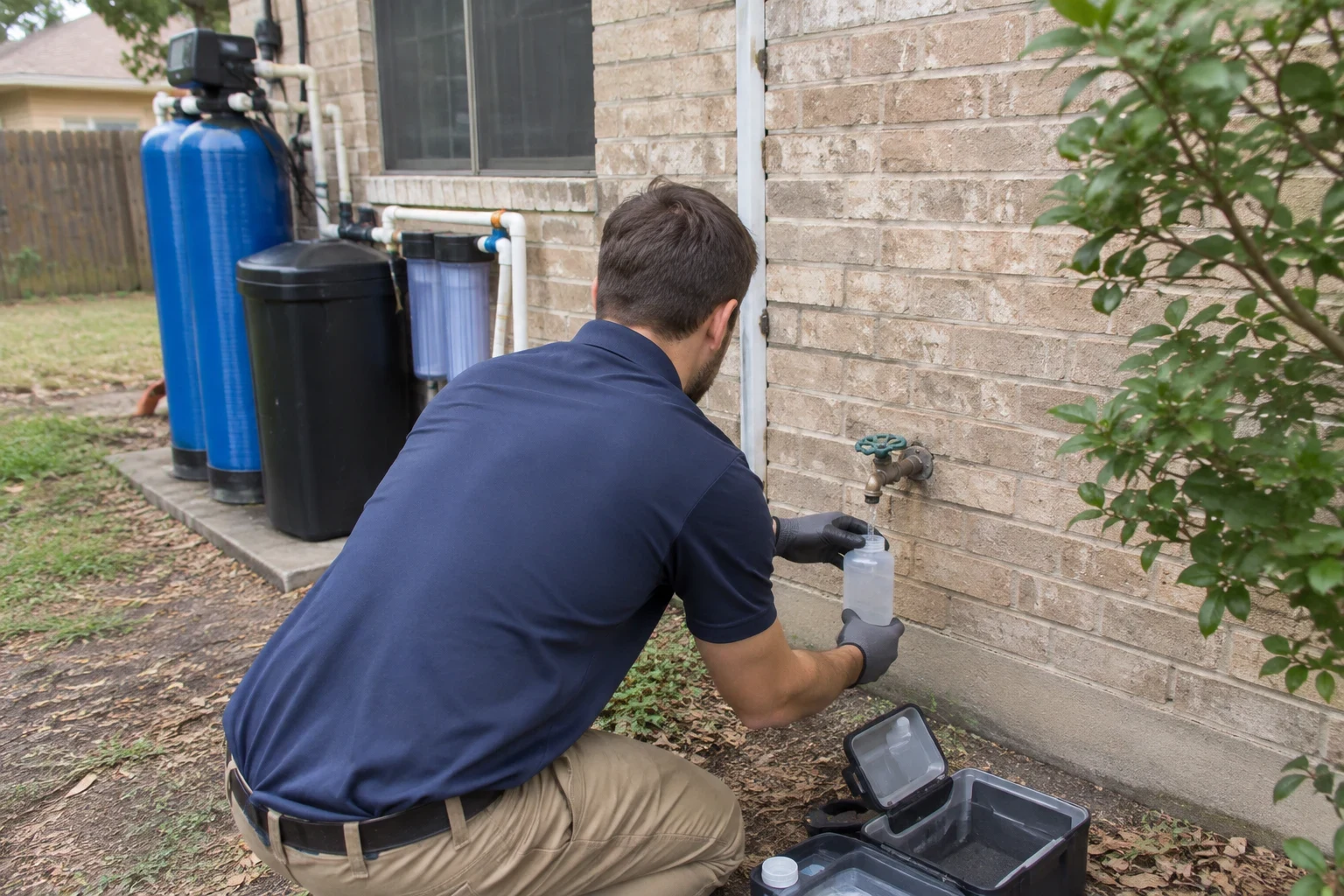
We test hardness and iron at a tap and look at where the main line enters your home. From those readings, we size a new softener to your hardness.
- 2
A straight recommendation
You get a written quote for a new softener or a different system if a softener is not the right tool. We explain the reasoning behind each option.
- 3
Installation
We shut off the main, cut into the line, set the bypass and mount the resin tank. Then we run the drain line with its air gap and fill the brine tank. Your water is off only while we connect the plumbing.
- 4
Startup, testing and cleanup
We run a manual regeneration, check every joint for leaks and test softened water at a faucet to confirm the hardness reading has dropped. We clean up the work area before we leave.
What moves the price of a softener
Once the water test is done, you get a written quote that lists equipment and labor on separate lines. Because we provide free installation, the system you pick sets most of the total. We quote the new system first.
- Hardness and household size
- Harder water and more people mean more resin, and a larger tank costs more. Testing keeps us from oversizing.
- Control valve type
- A metered valve regenerates only after a set number of gallons, which saves salt and water compared with a basic timer valve. It costs more up front.
- Your plumbing layout
- Many newer homes have a softener loop already roughed in, which makes the hookup simple. A home without one may need additional piping, and the quote will say so plainly.
- Iron or chlorine in the water
- Iron can foul resin, so some homes need a pre-filter or our iron and sulfur removal service ahead of the softener.
- What sets the price
- Tank size, control valve type and resin capacity set most of the equipment price. A larger tank or metered valve costs more but fits a busier household.
Common softener questions
Something not covered here? (512) 812-9374
Will a softener help my home?
What your neighbor has means little here. Our free test reads your hardness in grains per gallon. If that number is high enough to build scale, a softener earns its keep. If it sits near the line, we tell you that plainly.
Which softener size do I need?
That comes from your hardness in grains per gallon and how much water your household uses each day. We multiply the two to find the daily load, then pick a new unit with enough resin to regenerate every few days without wasting salt.
How is a softener different from a salt-free conditioner?
A softener removes calcium and magnesium through ion exchange, so a hardness test reads soft afterward. A salt-free water conditioner leaves those minerals in the water but changes them so less scale forms. The softener does more work, and the conditioner skips the salt and the drain.
Will softened water taste salty?
Most people notice no taste at all. How much sodium goes in depends on how hard your water was to begin with. You can use potassium chloride in place of salt, and many households put a reverse osmosis system at the kitchen sink for drinking water.
How often does the salt need topping up?
It depends on your hardness, your water use and the tank size. In most homes, checking once a month does the job. Keep the salt above the water line and break up any hard layer before it turns into a bridge.
If I have whole-home filtration, is a softener still needed?
Each one fixes something different. A whole-home carbon filter removes chlorine taste and smell, and a softener removes hardness. Plenty of homes run both, placing the carbon filter first so chlorine never reaches the resin.
Start with the numbers
A free water test shows how hard your water is and which new softener fits. We work in Round Rock and nearby towns, including Georgetown, Hutto and Pflugerville.