ServicesIron and Sulfur Removal
Round Rock Iron and Sulfur Removal
A metallic taste, orange rings in the toilet or a rotten-egg odor at the faucet all come from a specific source. We test your water, track down where the iron or sulfur starts, and suggest the smallest fix that takes care of it.
Find the source before you buy a filter
Iron and hydrogen sulfide behave differently, so we treat them differently. Dissolved iron is clear when it leaves the tap and turns orange once it meets air, which is why stains show up hours later in the tub. Hydrogen sulfide is a gas. You smell it at very low levels, and it can come from the water supply or be created inside your home.
That second case matters. A rotten-egg smell that appears only on the hot side usually starts in the water heater, where a magnesium anode rod reacts with sulfate and bacteria in the tank. A new filter will not fix that. Swapping the anode for an aluminum-zinc rod often does, and we will tell you so plainly. Rust that appears only in certain fixtures can point to corroding galvanized pipe rather than the water itself.
When the iron or sulfur really is in the incoming water, we size an oxidizing filter to your test results and your flow rate. If you already have a system that has stopped working, we test both taps and install the right new oxidizing filter in its place.
What the work includes
- Hot and cold side testing
- We test both sides separately for iron, manganese, hydrogen sulfide and pH. Comparing the two readings tells us whether the problem starts in the supply or inside the water heater.
- Sized New for Your Water
- We size a new oxidizing filter to your iron, sulfide and manganese readings and your household's flow rate, then set the backwash cycle so the tank keeps working. If an old unit is in place, we remove it and install the new one in its spot.
- Air-injection oxidizing filters
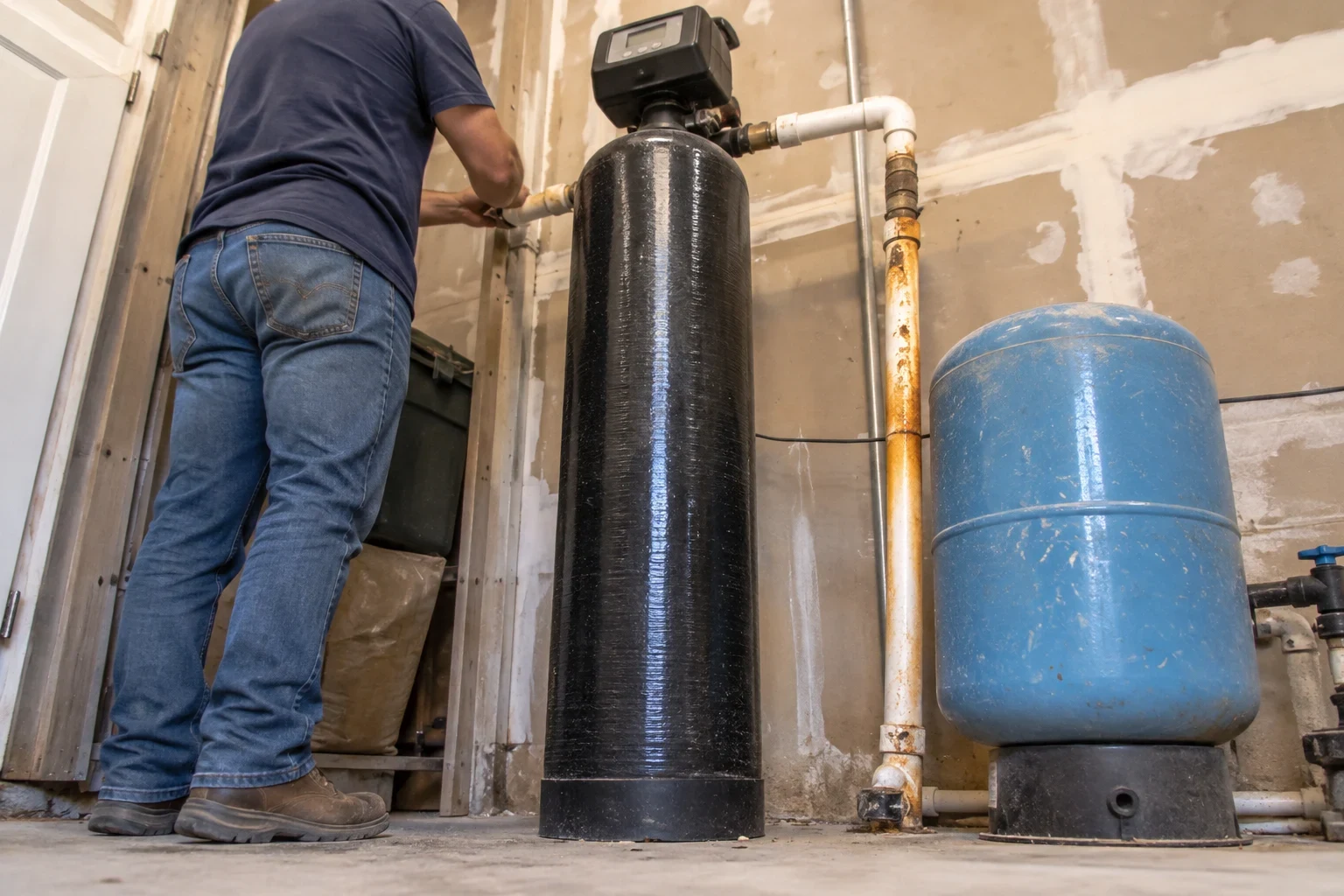
- For moderate iron and sulfur, the control valve draws in air during each regeneration and holds it as a pocket above the media. Water passing through that air oxidizes, so dissolved iron and sulfide become solid particles the media bed can trap. A scheduled backwash then flushes them to the drain, with no chemicals added.
- Catalytic carbon and specialty media
- Where sulfur odor is the main complaint, catalytic carbon or a manganese dioxide media can handle it with less equipment. We pick media by your pH and contaminant levels, since some media need a pH above 7 to work.
- Clean installation in your home
- Each system goes in with a bypass loop, which lets you route water around the filter whenever it needs service. The backwash line runs to an approved drain with an air gap, and we clear away packaging and pipe cuttings before we leave. Installation is free.
How to tell iron or sulfur is in your water
Rust-colored stains
Orange or brown rings in toilets, tubs and sinks are a sign of dissolved iron. Even a little leaves marks you can see over time.
Rotten-egg odor from hot taps only
This typically points to the water heater anode creating hydrogen sulfide. We test both taps to confirm where it starts.
Smell from hot and cold taps alike
When the cold side smells as well, the sulfide is probably arriving with your incoming water and has to be treated where it enters the house.
Dark specks or a black film
Black grit or gray stains often come from manganese, which shows up alongside iron and is treated the same oxidizing way.
Dingy laundry and a metal taste
Iron turns whites dull and leaves coffee and tea tasting bitter and metallic.
Slime inside the toilet tank
Red or brown slime can mean iron bacteria. That changes how we treat the water, so we check for it before suggesting any equipment.
How a visit runs
- 1
Free water test
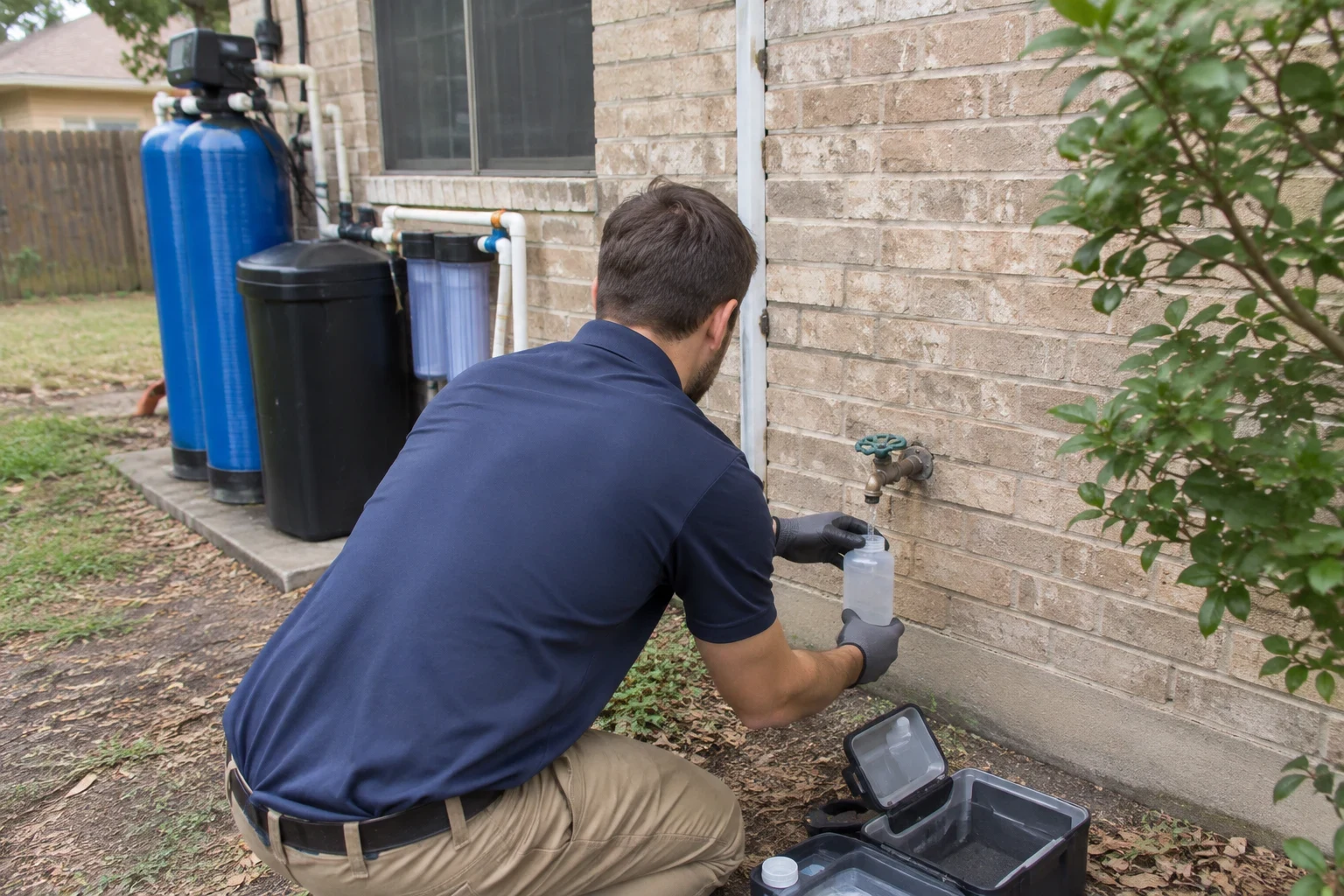
We draw samples from the hot and cold sides and from the point where water enters your home. You see the readings as we take them.
- 2
Trace the cause
We look at the water heater age and anode type, your piping and any existing treatment equipment. Then we explain what is causing the stain or odor and why.
- 3
Written recommendation
We explain what the readings mean and recommend the new filter the test supports, sized to your iron load and flow rate, with a written quote and free installation.
- 4
Installation and backwash setup
We install with a bypass, set the backwash frequency to your iron load and household water use, and run a full cycle before we leave.
- 5
Retest
We test the treated water so you can see the iron and sulfide readings drop.
What changes the price
The total comes down to what your test shows and the new system your water needs. Your quote lists every part and why it is there.
- How much iron and sulfide
- Stronger readings call for a bigger tank, more media or a more powerful oxidation step, like chlorine or peroxide injected before the filter.
- pH and manganese
- Low pH can rule out certain media or call for a neutralizing stage. Manganese increases the oxidation load.
- Household size and flow
- The tank has to handle peak flow so water moves through the media slowly enough to be treated. Bigger homes with more bathrooms need more capacity.
- Shape your current equipment is in
- If the tank and valve are solid, fresh media may be all it needs. A cracked tank or an outdated control head is usually worth swapping out.
- Getting to a drain and the pipes
- Backwashing requires a drain close by. Long drain lines or cramped utility areas mean more labor.
Iron and sulfur removal questions
Something not covered here? (512) 812-9374
Why does only my hot water smell like rotten eggs?
Many water heaters come with a magnesium anode rod. When sulfate in the water meets sulfate-reducing bacteria living in the warm tank, the reaction at that rod gives off hydrogen sulfide gas. Swapping in an aluminum-zinc anode often ends the odor. We test the hot and cold sides separately to confirm this before we suggest any equipment.
What iron filter do I need?
That depends on your test. We size the new filter's tank and media to your iron, manganese and sulfide levels, your pH and your peak flow, so water moves through slowly enough to be treated. If an old filter is in place, we remove it and install the new one in its spot.
Will a water softener remove iron?
Softener resin will trade out a little dissolved iron along with calcium and magnesium. The catch is that iron slowly fouls the resin and cuts its capacity, and the softener has no effect on hydrogen sulfide at all. When your test shows hardness that justifies a softener, we can set an iron filter upstream so the softener only deals with hardness. Our Water Softener Installation page explains that side.
Is the rotten-egg smell harmful?
At the levels found in household water, hydrogen sulfide is mostly a nuisance. It tarnishes silver, corrodes copper and makes water unpleasant to drink. It is still worth testing, because the smell can mask other issues.
How much maintenance does an oxidizing filter need?
An air-injection filter backwashes on a timer, usually every one to three days depending on iron load. The media bed typically lasts several years. We show you how to check the air pocket and use the bypass so small issues get caught early.
Find out what is staining your fixtures
We will test both taps, trace the cause and tell you which new filter fits. Installation is free if you need new equipment.