ServicesWater Testing & Analysis
Water Testing & Analysis in Round Rock
A softener or filter is only worth buying if the water at your tap calls for it. We measure your water at the kitchen sink, explain each reading in plain terms and tell you which new system, if any, fits your home.
Numbers first, recommendations second
A water test is the only honest starting point for any treatment decision. Scale on a shower head could mean hard water, or it could mean a softener that stopped regenerating. A chlorine smell could call for a carbon filter, or for a carbon tank whose media wore out years ago. The fix is different in each case, and so is the cost.
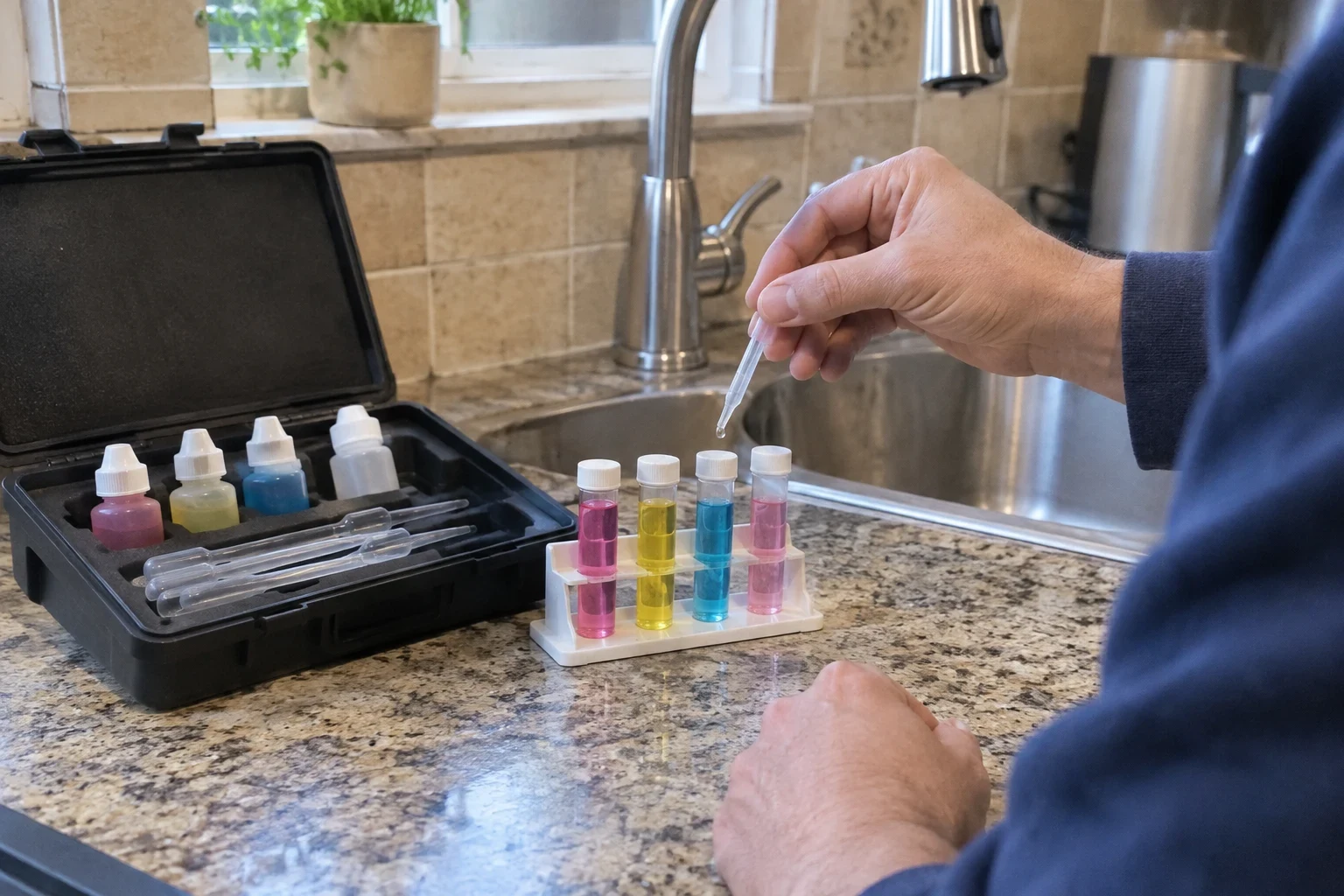
We measure hardness in grains per gallon, total dissolved solids, free and total chlorine, pH and iron at the point where you drink and cook. Those readings show which new system fits your water.
A clogged pre-filter, an exhausted resin bed or a brine line packed with salt can leave an old system doing little. When that is the case, we show you the readings and the new system that fits your water.
What the test covers
Hardness in grains per gallon
Calcium and magnesium are what leave white crust on fixtures and scale inside water heaters. Central Texas limestone puts a fair amount of both in the supply, but the level at your tap is what decides whether a softener or salt-free conditioner makes sense.
Free and total chlorine
Reagent tests show how much disinfectant reaches your faucet and whether it behaves like chlorine or chloramine. That matters, because chloramine needs catalytic carbon to remove, and a standard carbon filter may barely touch it.
TDS and pH
A TDS meter reads the total dissolved minerals and salts in parts per million. Paired with pH, it tells us how hard the water is on plumbing and how well a reverse osmosis membrane is rejecting what it should.
Iron and staining check
Orange or brown marks in toilets and sinks usually point to iron, sometimes from corroding pipes inside the house. A quick iron reading separates a water source issue from a plumbing one.
A look at your current setup
If an older system is already installed, we note where it sits and how it is plumbed. The test readings then show which new system fits in its place.
Outside lab analysis when needed
Some questions, like lead from older solder or specific trace contaminants, need more than an in-home kit. We can explain how to send a sample to an outside laboratory and help you read the report.
Signs it is time to test your water
- Scale returns soon after cleaning
- If shower glass and faucet aerators crust over within days, hardness is high or your softener has stopped regenerating. Testing tells you which.
- A softener is using salt but water still feels hard
- Salt disappearing with no change in the water means the softener is no longer doing its job. The test shows which new system fits.
- Chlorine smell or flat taste
- A pool-like odor at the tap means disinfectant is reaching your glass. The reading helps decide between a whole-home carbon system and a drinking-water unit.
- Stains, spots or cloudy glassware
- Rust-colored stains point to iron. White film on dishes points to dissolved minerals. Each calls for a different fix.
- You just moved in
- A new house often comes with someone else's equipment and no records. A test shows which new system fits your water.
How the visit runs
- 1
Set a time by phone
You call, we ask a few questions about what you are noticing, and we pick a time that suits you.
- 2
Samples at the tap and the equipment
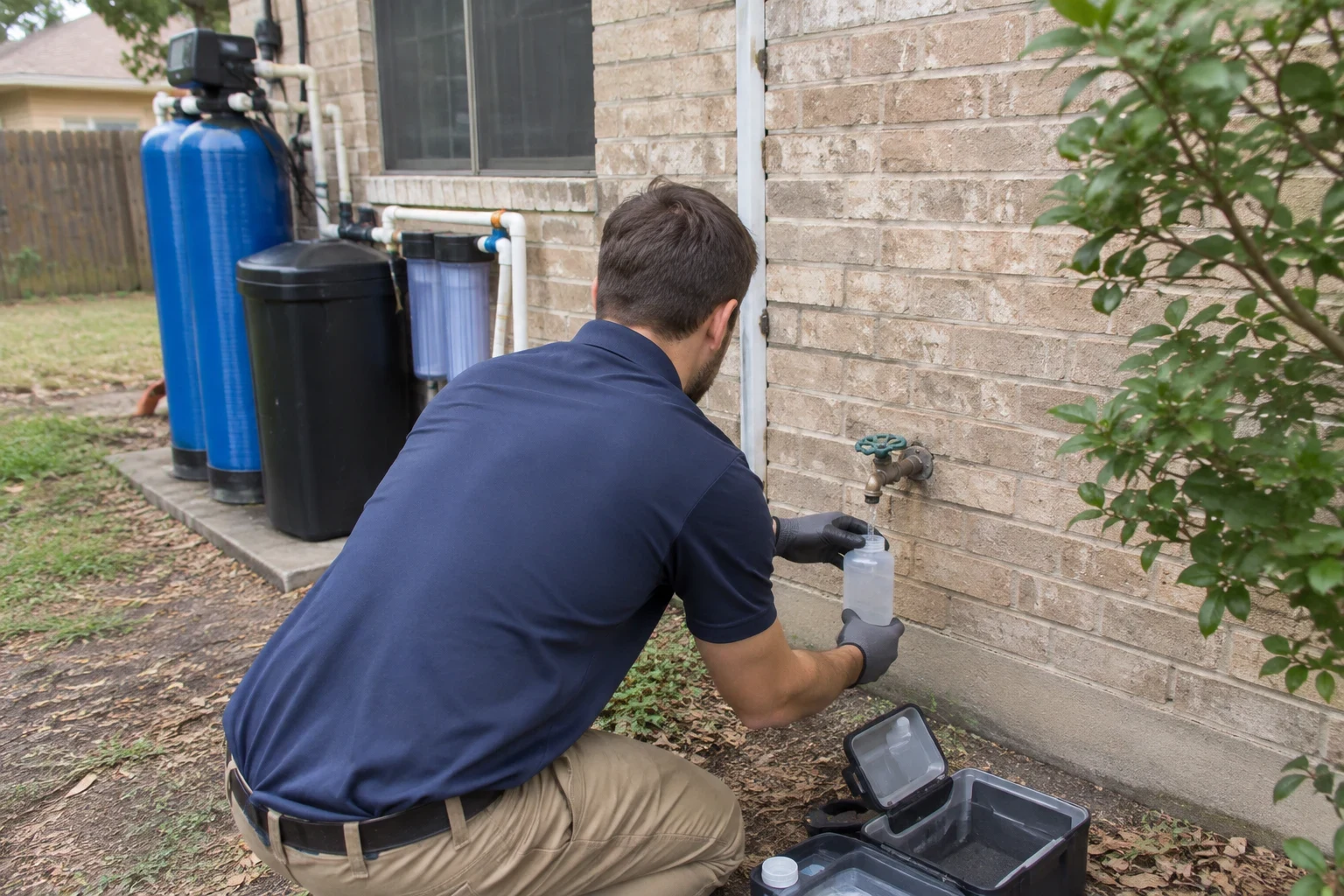
We run the cold tap long enough to clear standing water, then draw samples. If you have a treatment system, we also note how it is plumbed and where a new one would go.
- 3
Results at your counter
Most readings take minutes, so you see the numbers while we are there. We write them down and explain what each one means for your home and your plumbing.
- 4
A straight recommendation
That might be nothing or a new system. If new equipment is the right answer, we explain which system the test supports and give you a quote by phone or on the spot.
What affects the cost after the test
The in-home water test itself is free. What you might spend afterward depends on what the readings show. We price each option separately so you can compare the new systems that fit.
- The new system you choose
- Tank size, valve type and media set the equipment price. The test shows which new system fits, so you pay only for what your water needs.
- Which problem the numbers show
- Hardness, chloramine, iron and high TDS are each treated with different media or equipment, so the reading points to the scope.
- Lab analysis
- If you want a full laboratory panel for lead or trace contaminants, the lab charges by the tests ordered. We explain the options before you choose.
- Installation
- When new equipment is the right call, we offer free installation. Plumbing layout and where the system will sit still shape the final quote.
Questions about testing your water
- Does the water test really cost nothing?
- It does. We visit your home, run the test and go over the readings with you for free. Nothing obliges you to buy anything once we are done.
- How much time does testing take?
- Most visits wrap up in less than an hour, and that includes looking at any equipment already installed. The majority of readings come back within minutes, so you have answers before we head out.
- Why test city water that already meets standards?
- Those standards deal with safety. They say nothing about taste, hardness or how the water treats your pipes. A test reveals your hardness level, how much disinfectant arrives at the tap and whether the water changes between the meter and your faucet.
- How do you decide which system I need?
- We go by the readings. Hardness points to a softener or salt-free conditioner, chlorine to carbon filtration, high dissolved solids to reverse osmosis and iron to an iron filter. The test shows which new system fits your home.
- Is lead part of the test?
- An accurate lead number takes lab equipment, so we do not trust a quick reading in your kitchen for it. We can walk you through collecting a first-draw sample for an outside lab, then review the report with you when it comes back.
Get real readings from your own tap
A single visit puts actual numbers in front of you, along with a straight answer about which new system fits your water. When nothing needs work, we say so plainly.